THE GUIDE / growing
What to grow in a polytunnel: shortlist crop ideas (UK)
Use the harvest you want, available space and time to shortlist crops, record what needs checking, and decide what is ready to plan.
Choose the harvest before drawing the planting grid. Start with food you expect to use, then decide which crop ideas deserve research and space. A familiar crop name is only a starting point: the exact variety, growing method, harvest aim and conditions still need checking.
Research status: this is a provisional planning draft, not a verified crop list or sowing calendar. No primary horticultural source was retrieved for this article. The candidates below are prompts for investigation, not recommendations. Check crop and variety suitability, growing method, dates, spacing and care against appropriate primary guidance before relying on them.
Choose the job you want a crop to do
Make a shortlist rather than copying a long list of things said to grow under cover. Write down whether you are planning for a particular meal or use, a crop you already know how to handle, a small experiment, or a later use of a bed. Those are different planning goals; none establishes what will grow well in your tunnel.
Then ask what would make the crop worth keeping on the plan. Is the intended harvest ripe fruit, fruit picked at another stage, or leaves? Do you want to compare a variety, try a growing method, or simply learn whether the crop fits your routine? Keep these as your own criteria, not as assumptions about likely yield or ease.
Four familiar ideas to investigate
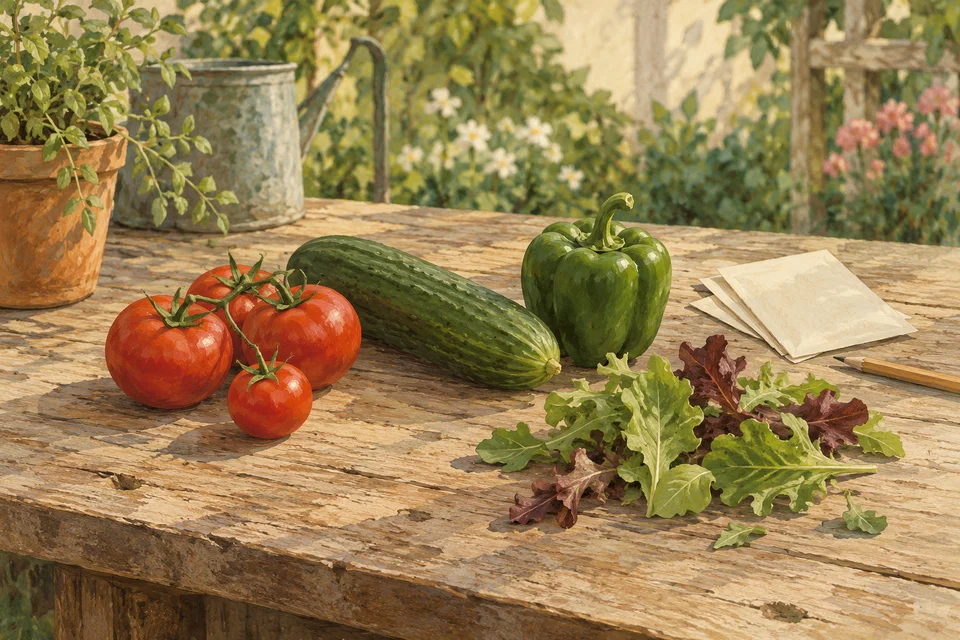
Treat each idea as an open research task. “Tomato”, “cucumber”, “pepper” and “salad” are broad labels, not interchangeable instructions; for salad, name the exact crop and variety you mean.
- Tomato: What would you use, and what harvest do you have in mind? Check the exact variety, growing habit, intended method, support and crop-specific care.
- Cucumber: Which type of harvest matters to you, and how would you use it? Check the variety, growing habit, intended method, support and harvest guidance.
- Pepper: Would this be a worthwhile trial for your aims and available attention? Check the exact variety, suitability for the intended conditions, growing method and care.
- Salad leaves or another salad crop: Which exact crop do you mean, and how would you use it? Check its variety, harvesting approach, any relevant repeat-sowing advice, and time and space requirements.
Build one evidence-backed crop record
For each candidate you decide to investigate, record its exact name, the harvest you want, and the source you consulted. Keep the packet or official variety page with the plan; write down the source address and date checked. Use a primary horticultural source for general growing guidance and the seed supplier's official instructions for the exact variety where available. Confirm that the guidance applies to your intended method and conditions.
For any figures you later use, copy units and context exactly. A spacing entry may be incomplete if the source distinguishes plants within a row from rows within a bed. The planting planner asks for those two figures separately; it does not supply crop spacing or decide whether a proposed arrangement is suitable.
Mark unanswered questions in the record rather than filling gaps with plausible figures or another variety’s instructions.
Fit investigated choices to real space and time
Start with the actual bed dimensions and the space needed to work around them. If you are still choosing the tunnel, the size calculator can help sketch beds and paths, but it does not establish a maker's usable growing dimensions.
For an existing tunnel, give beds simple names and put them on the same drawing as doors and access routes. Consider how much time you can give the planned crops and who will handle routine tasks. These are constraints to resolve against verified crop instructions, not grounds for assuming one candidate is low-care.
The bed calendar records which plan reserves a named space and keeps uncertain dates visible. It does not establish sowing, planting or removal dates. The seed-order guide keeps planting positions separate from a seed quantity you have chosen; it does not determine how many seeds to sow.
Decide which ideas earn a place
Give each investigated idea a clear status:
- Ready to plan: the variety and method are identified, the guidance answers the questions needed for your plan, and the space and care arrangements have been checked against it.
- Research first: you still need an answer, such as the intended growing method, spacing or a task someone must be able to do.
- Set aside for this plan: it does not fit your stated purpose, space or available attention, or you have chosen to leave the question for another season.
For example, you might want tomatoes for meals but have no variety or growing instructions yet. That is a named research task, not a completed bed booking. Writing “tomatoes in Bed A” would hide the decisions still to make. This is an illustrative planning example, not a recommendation for that crop or location.
Once the required spacing is checked, use the planner to count positions. The worked spacing examples explain the arithmetic and its limits; the count is not a yield prediction. Put the proposed dates and their sources in the bed calendar, keeping any assumed release date clearly marked.
Keep actual observations and actions in a growing diary, separate from the proposal. The planning worksheets provide blank diary, calendar and seed-order records. A past observation can give you a question to investigate; it does not establish why a crop behaved that way.
Finish one bed before filling the rest
Take one crop from idea to a complete record: exact variety, intended harvest, source, growing method, verified spacing and the tasks required by that guidance. Then count its spaces and print the plan. This makes the open questions visible before you repeat the choice across the tunnel.